
Vail, Arizona: Newer Homes, Top-Rated Schools, Room to Breathe
Vail is the family suburb southeast of Tucson that people find when the school district matters more than the ZIP code. It is unincorporated Pima County land along I-10 in the Rincon Valley — newer homes at medians around $410,000, lots with real desert behind them, and the Vail Unified School District, which ranked first among large Arizona districts in the state's 2025–26 letter grades. The trade is just as clear: you will drive for almost everything, and downtown Tucson is 25–35 minutes away on a good run.
 By Marisol Rodriguez, editor & host of TucsonBound
What Vail actually is
The first thing to understand is that Vail is not a town. There is no city hall, no Vail police department, and no mayor. It is an unincorporated community that grew up around a railroad stop named for the Vail brothers, whose Empire Ranch was one of the big cattle operations in southern Arizona. The Census puts the Vail CDP at 13,604 people in 2020, and the wider area — the master-planned communities and rural lots spread across the Rincon Valley — holds considerably more. About 91% of homes are owner-occupied, which tells you the character: this is a place people buy into and stay.
That unincorporated status is not a footnote. It shapes daily life. Services come from Pima County, rules are county rules, and new development gets argued out at county hearings. Some buyers hear "unincorporated" and picture neglect. The reality on the ground is newer subdivisions with HOAs handling the local layer, county roads and sheriff coverage, and a school district that functions like the community's town center. The point is to know which system you are buying into before you buy.
The schools are the headline, and they earn it
Most Vail moves start with the Vail Unified School District. In the Arizona Department of Education's 2025–26 letter grades, Vail Unified ranked first among Arizona districts and networks with 10 or more schools, and 21 of its 22 graded schools earned an "A." Cienega and Empire high schools anchor the district, and the K–8 campuses are spread through the same neighborhoods they serve, so the school run is short even when the work commute is not.
Two honest cautions. First, letter grades move year to year — check the current grade for the specific school your address feeds into, not the district's reputation. Second, a fast-growing district is a construction zone by definition: new campuses, boundary changes, and portable classrooms are part of the deal in a place growing this quickly. Our Tucson schools guide covers how the district map fits together, and Vail is a big reason it sits at the top of our best neighborhoods for families comparison.
What homes cost and what you get
Vail medians run around $410,000 — the Census Bureau's median value for owner-occupied homes is $414,600 — for housing stock that is mostly newer than what the same money buys in town. The typical Vail home is a single-story or two-story production home in a master-planned community, or a custom or semi-custom home on a larger rural lot further out. Rancho Del Lago, built around its golf course, is the established name; newer phases keep pushing east and south along the Houghton and Colossal Cave corridors.
Run the comparison honestly. Against the metro median of about $370,000, Vail costs more per home — but the homes are newer and larger, and the school district is the reason for the premium. Against Oro Valley at $555,000–$580,000 medians, Vail delivers a similar family-suburb package for roughly $150,000 less, with a longer commute as the price. In our East Tucson and Vail territory guide, Vail is the top of that market; Rita Ranch is the same school district closer in and a step down in price.
Daily life: desert at the door, errands on Houghton
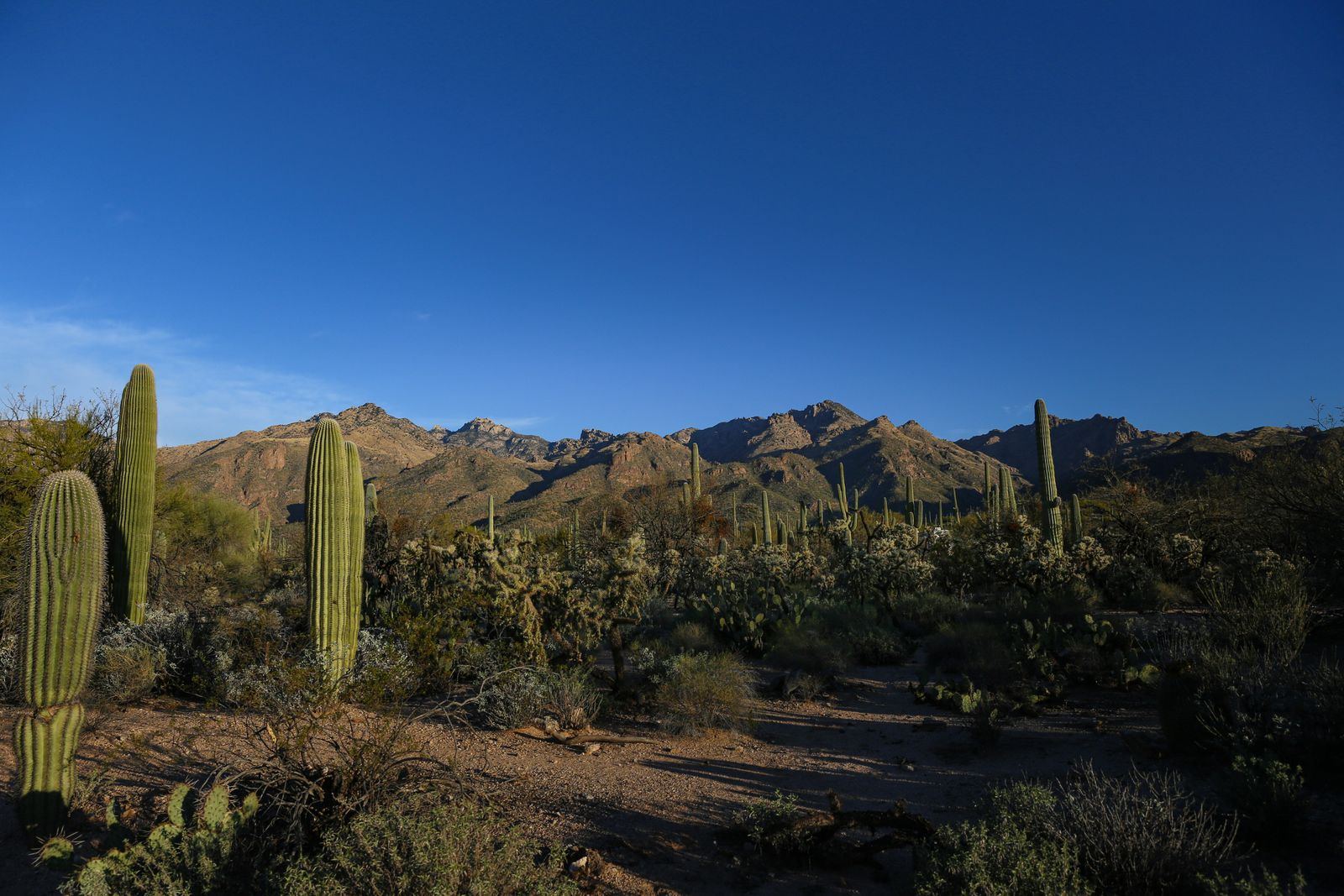
The Rincon Valley is the quiet amenity. Saguaro National Park's east district and Colossal Cave Mountain Park sit on Vail's side of the metro, the Rincon Mountains fill the eastern window of half the homes here, and the night sky is genuinely dark. If your weekends run on trailheads, this side of Tucson is hard to beat — see our Tucson hiking guide for where locals start.
The errand map is thinner. Day-to-day shopping clusters along the Houghton Road corridor, and a full retail run — the big-box stores, the mall, the specialty shops — means a drive into Tucson's east side. Davis-Monthan Air Force Base households are well represented here, and the base is a straight run northwest. Downtown and the University of Arizona are 25–35 minutes via I-10 in good traffic; at rush hour, budget more and do not pretend otherwise. Vail works best for households whose daily anchor points — school, home, one commute — line up on the southeast side.
Who Vail fits, and who it does not
Vail fits school-first families, Davis-Monthan and southeast-corridor workers, remote workers who want a newer home and a mountain view for their office window, and buyers who want space between them and the next house without leaving the metro. It does not fit anyone who wants to walk to dinner, live without a car, or be ten minutes from downtown. Those are not flaws. They are the terms of the trade, and Vail is a good deal exactly when you accept them on purpose.
At a glance: Location: unincorporated Pima County, southeast of Tucson along I-10 in the Rincon Valley. Typical prices: medians around $410,000. School district: Vail Unified — first among large Arizona districts in 2025–26 state letter grades. Best for: school-first families, Davis-Monthan households, remote workers, desert-and-trails people. Watch for: the I-10 commute at rush hour, county (not city) services, HOA dues in the master plans, and growth-driven school boundary changes.