
Is Tucson a Good Place to Retire?
Yes — for most retirees who can live with summer heat and a car-dependent daily life, Tucson is a good place to retire. You get a median home price around $370,000, no Arizona state tax on Social Security income, winters with daytime highs in the 60s and 70s, and real hospitals and specialists through Banner Health, Tucson Medical Center, and Carondelet. The costs are just as clear: June through September regularly tops 100 degrees, public transit is limited, and neighborhood quality varies block by block, so where you buy matters more here than the city name does.
 By Marisol Rodriguez, editor & host of TucsonBound
Why retirees choose Tucson
The money works without tricks. Housing does most of it. A metro median near $370,000 sits well below Phoenix and far below coastal California, and Green Valley resales still trade under $300,000–$350,000 in real numbers. Arizona does not tax Social Security, and Pima County property taxes are moderate by national standards. Run your own total — mortgage or rent, HOA and community fees, taxes, utilities — in our cost of living guide and property taxes explainer before you trust any list that calls Tucson cheap and stops there.
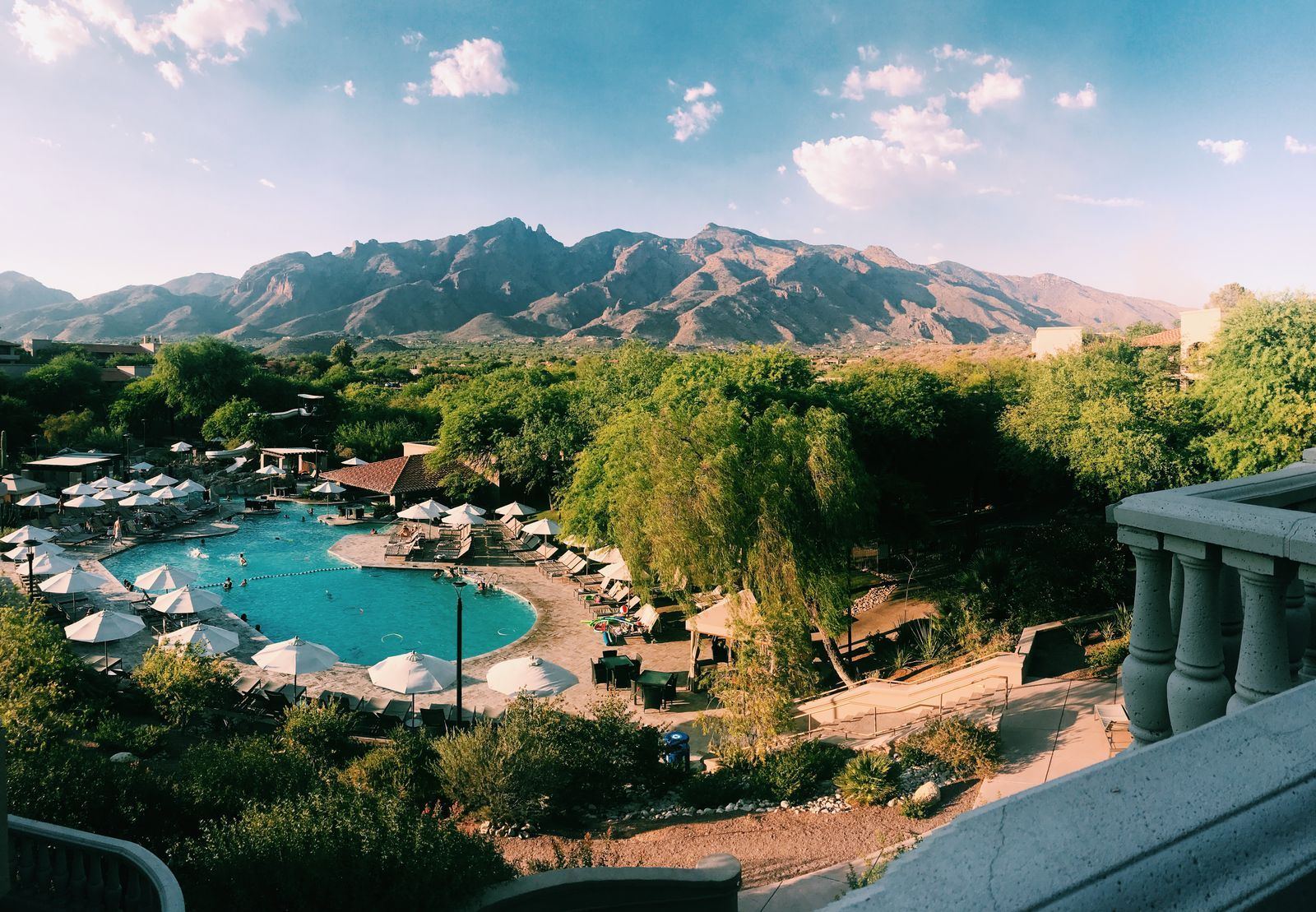
Winter is the product. From November through March you get the season people move here for: sun, dry air, golf and trails in the morning, and Saguaro National Park on both sides of the city. Tucson counts 350-plus days of sunshine a year. That is not a slogan, it is the daily routine — and it is why so many full-time retirees started as snowbirds who rented one winter and stayed.
Health care is a real system, not a clinic and a hope. Banner–University Medical Center, Tucson Medical Center, and Carondelet run the hospital network, with a dense corridor of specialists on the northwest side and around Oro Valley Hospital. If a specialist drives your decision, pick the neighborhood after you pick the doctor, not before. Proximity in minutes, on a normal weekday, is the number that counts.
There is enough city. Tucson was the first U.S. city named a UNESCO City of Gastronomy, the University of Arizona anchors lectures, sports, and arts, and the calendar does not go empty in winter. Retirees who need a major metro's scale sometimes find Tucson small. Retirees who want a real city without a real city's prices usually find it right.
What catches people out
The common mistake is judging Tucson by a January visit. January is honest about winter and silent about summer. From June through September, afternoons top 100 degrees as a matter of routine, and July through September adds monsoon storms. Full-timers handle it the way northerners handle winter — mornings outside, afternoons in, errands early — but you should not buy on the assumption you will be the exception. Rent through a summer, or at least spend two honest weeks here in July, before you decide.
The second surprise is the car. Tucson is spread out and transit is thin, so nearly every retirement plan here assumes you drive, or live somewhere that puts daily needs within a short drive. The third is variance: two streets in the same ZIP code can feel like two different cities, which is why our safest neighborhoods guide and a slow drive at night beat any citywide crime average.
The point is simple: Tucson rewards retirees who choose the neighborhood first and the house second, and who test both seasons before they buy.
Where retirees land
Most retirees narrow it to the same short list. Oro Valley for safety, golf, and nearby care at medians around $555,000–$580,000. Green Valley for the most affordable full-amenity 55+ living, organized around Green Valley Recreation. The Catalina Foothills for upscale desert living at medians around $670,000–$690,000. SaddleBrooke and Sun City Oro Valley when an instant social life inside a 55+ community is the priority. Our guide to the best neighborhoods in Tucson for retirees compares each one on safety, care, cost, and daily life, and the 55+ communities comparison puts the age-restricted options side by side, fees included.
How to test it before you buy
Do it in order. First, rent one full winter in the area you think you want — our winter rentals guide covers how the season books and what it costs. Second, come back for part of a summer, or talk plainly with full-time residents about theirs. Third, price the total monthly cost of two or three specific homes, not the metro median. If all three tests still point here, Tucson is not a gamble. It is a decision you already made with evidence.
Frequently asked questions
What is the most affordable place to retire in the Tucson area? Green Valley, about 25 miles south, with many resales under $300,000–$350,000 and the GVR recreation network built into daily life. Vail and parts of Marana are the in-metro value alternatives, with newer single-story homes below north-side prices.
Does Arizona tax Social Security income? No. Arizona does not tax Social Security benefits. Most other retirement income is taxed at a flat state rate, so compare total monthly cost rather than any single tax.
How hot does Tucson get in summer, honestly? Expect routine 100-degree-plus afternoons from June through September, low humidity outside monsoon season, and cooler desert nights. Most full-time retirees shift outdoor life to mornings and treat midday summer like midday winter up north — planned around, not suffered through.